
Direct handling
No hand-off.
She is your only contact. No associate or other attorney will handle your case.

Maimonis Law LLC · Chicago · Statewide
Maimonis Law LLC represents employers, insurance carriers, third-party administrators, self-insured organizations, captives and municipalities throughout Illinois.
Alexandra Eve Maimonis brings experience in workers’ compensation, municipal defense, civil rights and insurance litigation. She evaluates each file, handles hearings and depositions, and remains the client’s direct contact from referral through resolution.
The difference
Maimonis handles every claim herself, providing client service, advocacy, and expertise.
Direct handling
She is your only contact. No associate or other attorney will handle your case.
Reporting
Reporting as directed by the client, built around their needs. No forms or automatic updates unless specified.
Budgets and billing
She follows the carrier’s litigation management guidelines and e-billing platform—systems she has worked with for years.
Contact
Contact Alexandra at contact@maimonislaw.com.
This guide is for claims professionals with nationwide or global duties, offering a streamlined overview of Illinois’s unique workers’ compensation system. It highlights the state’s distinct rules and issues in exposure, medical, wage, permanency, and Medicare—making Illinois’s complex requirements accessible for quick reference.
Alexandra Eve MaimonisFounding Partner
Illinois workers’ compensation
Illinois workers’ compensation, from the first report to the final decision. Explore the coverage, benefit and defense issues that shape each claim.
HR Reference PDF 2 pages
Does the injury fall within the Act?
When should defense counsel become involved?
What benefits and medical costs are in play?
Which disability measure fits the evidence?
Have both past payments and future care been addressed?
What will the agreement close, and what remains open?
What is the next review level and its requirement?
Are the employer’s coverage and reporting duties being met?
Attorney advertising. Prior results do not guarantee a similar outcome.
Who we represent
The Chicago story
Chicago remains the touchstone: the place where she first learned how facts, discipline, courage, and service meet in real work.
Those Chicago-rooted values carry into a statewide workers’ compensation defense practice for the insurance, employer, and municipal communities.
Meet AlexandraA legacy of service
Although Maimonis Law LLC is headquartered in Chicago, its reach extends throughout Illinois. Alexandra Maimonis represents employers, insurance carriers, self-insured organizations, third-party administrators, and municipalities in workers’ compensation defense litigation across the state.
Their examples were personal, but they became professional principles: prepare carefully, protect what matters, respect the process, and stand steady when the stakes are high. Alexandra carries those Chicago-rooted values into a statewide workers’ compensation defense practice for the insurance, employer, and municipal communities.
Illinois’ no-fault workers’ compensation system provides benefits for work injuries and illnesses. Employers fund coverage and evaluate liability under the Act.
Employer reporting is separate. More than 3 lost scheduled workdays triggers IWCC reporting. Submit electronically through FROI/SROI. Reporting does not file the employee’s claim. §6(b)
Investigate the facts supporting each coverage decision.
The petitioner or the petitioner’s attorney files the Application for Adjustment of Claim. Before a hearing is requested, the adjuster may negotiate settlement directly with petitioner’s counsel. An application is not required to retain defense counsel.
Proactive employers engage counsel when an accident occurs, filed claim or not, to guide investigation and preserve evidence.
Some employers defer counsel to limit initial legal fees while adjusters handle the claim and negotiate settlement directly.
Refer hearing requests, including §19(b)/§19(b-1), to defense counsel. A licensed attorney must appear for the employer or insurer. Counsel files an appearance when retained. 50 Ill. Adm. Code 9020.40.
Cases ordinarily cycle every three months. At three years from filing, trial is required absent sufficient grounds for a continuance.
Track the red line separately from the claim-filing deadline.
Evaluate medical care, temporary and permanent disability, vocational rehabilitation, survivor benefits, and potential penalties separately.
The employee has a choice of two providers, in addition to first aid and emergency treatment, plus all referral chains stemming from those two providers. These referral chains can broaden the employer’s medical exposure. An approved Preferred Provider Program (PPP) changes the selection rules; opting out uses one choice. §§8(a), 8.1a
A §12 examination evaluates injury and disability at the employer’s expense. Utilization review under §8.7 evaluates treatment necessity. Section 8.2 limits covered medical payments; check the service, date, applicable fee schedule and negotiated rate.
Average weekly wage (AWW) is the pre-injury weekly wage used to calculate benefits. Start with gross (pre-tax) earnings, generally over the prior 52 weeks, and apply §10 adjustments. Verify payroll before setting rates.
| Benefit | When it applies | General rate | Duration |
|---|---|---|---|
| TTD Temporary total | Off work due to injury, or restrictions the employer cannot accommodate, during recovery. | Generally 66⅔% of AWW. | Pay while eligible, until return to work or maximum medical improvement (MMI), as applicable. |
| TPD Temporary partial | Working during recovery with lower earnings due to injury. | Generally 66⅔% of the difference between pre-injury earning capacity and current gross earnings. | Ends at regular-duty return or MMI. |
| PPD Permanent partial | Permanent partial disability. | Scheduled loss and person-as-a-whole awards generally use 60% of AWW. Wage differential uses 66⅔% of the earnings difference. | Amount and duration depend on award type. |
| PTD Permanent total | Permanent total disability under §8(f). | Generally 66⅔% of AWW. | Payable for life, subject to statutory review provisions. |
Minimums and maximums apply. The TPD gross-earnings rule shown applies to injuries on or after June 28, 2011.
The form of permanent disability determines the calculation. Evaluate scheduled loss, whole-person disability, wage differential and permanent total disability against the evidence.
The schedule assigns weeks to a body part. The proven loss of use determines the compensable share of those weeks. §8(e)
| Body part | Weeks |
|---|---|
| Thumb | 76 |
| Hand: general | 205 |
| Hand: repetitive / cumulative-trauma CTS | 190 |
| Arm | 253 |
| Foot | 167 |
| Leg | 215 |
| Eye | 162 |
PPD rate derives from average weekly wage (AWW), subject to statutory limits. CTS: injuries on/after 6/28/2011; above 15% requires cause shown by clear and convincing evidence; cap 30%. Other weeks: on/after 2/1/2006. Special loss rules may apply.
§8(e)(9)
These examples use the $720 PPD rate above. For injuries on/after 6/28/2011, above 15% requires cause shown by clear and convincing evidence; cap 30%.
Back and shoulder injuries and loss-of-trade claims can be valued under §8(d)(2). The percentage depends on the evidence. Surgery, recovery and the ability to resume the usual trade can materially change exposure.
500 weeks × disability percentage × PPD rate
Compare surgical and nonsurgical treatment, residual pain and functional loss, recovery at MMI, and permanent restrictions. A full-duty release does not dictate a particular percentage.
Assess which customary job duties the employee can no longer perform, permanent restrictions and vocational evidence. Loss of trade may carry substantially greater value; the percentage varies with the facts.
The PPD rate derives from AWW, subject to statutory limits. For injuries on/after 9/1/2011, §8.1b weighs impairment, occupation, age, future earning capacity and treating records; no single factor controls.
Loss of trade under §8(d)(2) may apply without reduced earning capacity, or after waiver of §8(d)(1). Evaluate wage differential separately when earning capacity is reduced.
In Will County Forest Preserve District, the court affirmed a 25% whole-person award after shoulder surgery and a full-duty return with residual symptoms. The basis was a nonscheduled injury, not loss of trade. This was the result on that record, not a standard percentage.
2012 IL App (3d) 110077WC, ¶¶4-10, 21-24.
When an injury prevents the usual line of work and reduces earning capacity, compare what the employee would be earning in that occupation at the time of resolution, but for the injury, with what the employee is able to earn after the injury. §8(d)(1)
Duration changes the exposure. For injuries on/after September 1, 2011: five years after the award or until age 67, whichever is later. Earlier injuries generally carry lifetime duration. Evaluate current occupational wages, restrictions and earning-capacity evidence.
Earning capacity may differ from actual pay. Wage differential and PPD for the same injury are alternative remedies.
Permanent total disability (PTD) may apply when an employee cannot perform work in a reasonably stable labor market. Medical restrictions and vocational evidence help determine whether the employee can work. Benefits under §8(f) generally continue for life.
A separate rule covers loss of two body parts. The Act treats permanent and complete loss of use of both hands, both arms, both feet, both legs, both eyes, or any two of these as total and permanent disability. §8(e)(18)
Payment duration, the benefit rate, future medical care and applicable adjustments drive the cost. Evaluate restrictions, transferable skills, vocational evidence and available work. Apply the statutory benefit limits, credits and review rules.
A workers’ compensation Medicare set-aside (WCMSA) reserves settlement funds for future injury-related treatment and prescriptions that Medicare would otherwise cover.
| Medicare status | Total settlement |
|---|---|
| Already a Medicare beneficiary | Over $25,000 |
| Reasonable expectation of Medicare enrollment within 30 months | Anticipated total settlement over $250,000 |
CMS WCMSA Reference Guide v4.6 (July 13, 2026).
The full allocation is funded up front.
Initial funding plus scheduled annuity payments.
The beneficiary may self-administer or use a professional administrator. Identify the administrator and budget administration costs before settlement.
Medicare payment after proper depletion depends on the funding method and CMS rules. Unrelated spending does not count as proper depletion.
Medicare conditional-payment recovery.
MSA allocation and administration.
An MSA does not repay past Medicare payments. Identify related conditional payments, dispute unrelated charges and resolve the recovery claim. Check Medicare Advantage and Part D plans separately; their recovery is handled by the issuing plan.
Confirm Medicare status, future-care projections, recovery amounts, funding and administration. Assign responsibility in the agreement and coordinate required insurer reporting and payment documentation.
CMS stopped accepting $0 WCMSA proposals on July 17, 2025. Document why a zero allocation is appropriate under CMS guidance; a denial label alone does not establish that result.
Identify what remains unpaid, what will stay open and what the agreement will close. Include future medical funding and the MSA when assembling settlement authority.
Confirm authority, terms and rights resolved by the approved settlement contract. The settlement ends the settled issues.
Present the defense. Obtain a written decision on disputed issues.
Reassess benefit exposure, future care and settlement authority throughout the claim. Budget counsel, experts and depositions separately. Interim awards may follow a different review path.
Review may proceed from the Commission to the circuit court, the Appellate Court and, when permitted, the Illinois Supreme Court.
Bring documentary exhibits in paper form and identify the pages relied upon. Do not submit document collections on USB drives. Electronic case filing uses CompFile.
State claims have a statutory exception to judicial review. Courts may remand.
The Illinois Act addresses insurance coverage, workplace notices, injury records, reporting and protection of workers’ rights.
An employer’s accident report does not file the employee’s Application for Adjustment of Claim.
Knowing and willful failure to insure can trigger up to $500 per day and a $10,000 minimum civil penalty. Separate Department of Insurance citations range from $500 to $10,000. Individual liability requires the statutory findings. §4
Negligent failure to insure is a Class A misdemeanor; knowing failure is a Class 4 felony, subject to statutory exceptions. Knowing asset concealment to avoid compensation can also be a felony. Stop-work orders require the statutory process. §4
The Act generally replaces civil damages claims against a covered employer for a compensable work injury. Section 4(d) provides a civil-action route for specified knowing failures to insure, with loss of listed defenses. Exceptions require separate analysis. §§4(d), 5(a), 11
The Injured Workers’ Benefit Fund (IWBF) helps eligible workers whose uninsured employers fail to pay final awards. Eligibility includes filing against the employer, joining and serving the State Treasurer, and meeting the Fund’s claim requirements. Payments depend on available funds and may be pro rata. §4(d)
The IWBF is distinct from the Commission Operations Fund and insurance guaranty arrangements.
Representation for employers, carriers, third-party administrators, self-insured organizations, and public employers in disputed Illinois workers’ compensation matters.
The practice covers arbitration, Commission review, judicial review, and settlement, credit, and recovery questions.
When a third-party action accompanies an injury, Section 5(b) liens, settlement allocation, waiver demands, and future credits can affect the workers’ compensation file. Maimonis’s prior civil-litigation experience includes intervention and employer contribution defense in circuit court.
The first question is what changes value: the mechanism of injury, the medical history, the job duties, the witness, the deadline, the lien, the forum, or the authority. The file is organized around that issue rather than around every document that exists.
Medical opinions are only as reliable as the facts beneath them. The firm builds the chronology and the medical record together — what history the physician received, what exposure was assumed, whether the timing fits, whether alternative causes were considered — and prepares the Section 12 examiner with verified job duties, work logs, and the questions that actually matter, so the expert deposition tests the foundation and not just the conclusion.
High-exposure disability claims are proved or defeated on the vocational record: restrictions tied to the litigated injury, transferable skills, labor-market evidence, and a job search that either happened or did not. Section 19(h) petitions turn on a comparison — the disability at the original award against the condition alleged now — not on the fact of a later surgery.
At arbitration the decisions are made in real time: examination, objections, foundation, impeachment, order of proof. Review is not a new trial; the brief has to use the record precisely. When later review is handled by other counsel, the quality of the record below is what remains.
Full descriptions on the Representative Work page.
When compensation payments and a third-party action overlap, lien rights, waiver pressure, allocation, and future credit have to be addressed before value is lost. The firm calculates the lien, evaluates whether to monitor, intervene, or pursue recovery directly, and reviews proposed settlements for the numbers, the waiver language, and the future-credit treatment. When the employer itself is brought into the third-party case on a contribution claim, the firm defends the employer in the circuit court and keeps the lien recovery in view — in one matter recovering $42,000 under Section 5(b) at the settlement hearing after the plaintiff had demanded a full waiver of the lien.
Her current practice is Illinois workers’ compensation defense. Her background includes municipal, civil-rights, employment, and insurance defense.
Prior public-entity work includes Chicago, Harvey, and Markham. Maimonis has defended police officers, police departments, and municipalities in the Northern District of Illinois. Her experience includes civil-rights and employment litigation, successful summary-judgment motions, and serving as second chair at federal jury trials.
Her prior work included EEOC charges, premises and general liability, homeowners’ association disputes, and injury-related subrogation and third-party litigation—including employer contribution claims and Section 5(b) recoveries.
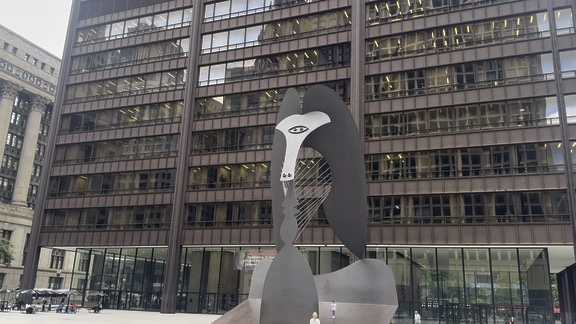
Prior public-entity work includes the City of Chicago, the City of Harvey, and the City of Markham — workers’ compensation, premises liability, and federal matters — including summary judgments won for the City of Harvey in premises-liability cases on more than one occasion. A public-entity file rarely stays in one lane: department operations, personnel records, FOIA, indemnity, budget authority, and several decision-makers can all bear on the same matter, and the firm coordinates the law department, the risk team, the department witnesses, and the carrier or TPA around one record.
Maimonis has defended police officers, police departments, and municipalities in the United States District Court for the Northern District of Illinois — excessive force, false arrest, and related claims — together with employment-discrimination, retaliation, and labor matters for public employers. She has drafted, argued, and prevailed on motions for summary judgment in federal court and second-chaired federal jury trials.
Position statements are written as if the charge will become a lawsuit, because it may: decision-makers identified, records preserved, comparators reviewed, the narrative accurate and supportable. When matters proceed, the work is pleadings, discovery, depositions, dispositive motions, damages analysis, and trial preparation.
Premises, auto, personal-injury, and employer-liability defense for insureds and self-insureds, organized around three questions: what duty is actually alleged, what evidence proves or defeats breach and causation, and what damages the medical and economic record supports. Homeowners’ association disputes — governing documents, board authority, enforcement, assessments — are handled with the same discipline.
When a compensable injury produces a third-party case, the firm protects and collects the Section 5(b) lien — intervening in the employee’s action where necessary — and defends employers brought into that case on contribution claims. Two examples are on the Representative Work page: a lien recovery of $42,573.63 from a $60,000 third-party settlement after a recommended waiver was refused, and $42,000 recovered under Section 5(b) for an employer defended against a contribution claim.
A summary-judgment motion begins during discovery. Written discovery, requests to admit, and depositions are planned backward from the issue the court may decide, so the statement of material facts is supported by admissible record citations and leaves no genuine dispute on the controlling question.
Every matter is evaluated on its facts, its forum, and the decision the client needs to make. contact@maimonislaw.com
23
Northern District of Illinois matters identified in public litigation analytics
17
Civil-rights matters identified in that public profile
11
Matters reaching summary judgment
Public litigation analytics identify 23 matters in the U.S. District Court for the Northern District of Illinois in which Maimonis appeared as counsel.
The summary-judgment count identifies procedural activity. It should not be represented as 11 victories attributable solely to one attorney.
Maimonis's prior public-entity work includes matters for:
Her federal and municipal work has included civil-rights, employment, discrimination, municipal, and liability matters, together with discovery, witness preparation, depositions, dispositive motions, settlement analysis, and trial preparation.
Maimonis has obtained summary judgment in federal and civil matters. Individual case pages will be added as the public motions and orders are assembled.
Each future case page will identify:
A summary-judgment brief cannot replace missing proof. The motion depends on the record created through admissions, documents, deposition testimony, expert evidence, and properly supported statements of material fact.
Maimonis's federal litigation approach is therefore built backward from the issues the court may later decide.
Alexandra Eve Maimonis is the founding partner of Maimonis Law LLC. She practices Illinois workers’ compensation defense. Her prior experience includes municipal defense, civil rights, employment, insurance coverage, and class actions.
She began as a 711 law clerk in the Cook County State’s Attorney’s Office, later practicing at Chicago defense firms, SmithAmundsen—now Amundsen Davis—and Litchfield Cavo. She formed Maimonis Law in 2023 and has practiced under her own firm full time since January 2024.
She handles hearings, depositions, and appearances throughout Illinois. She holds a J.D. from The John Marshall Law School and a B.A. from the University of Wisconsin–Madison and is admitted in Illinois.
Founding Partner
Maimonis Law LLC
Formed in 2023 · Chicago · Statewide
The practice
Illinois workers’ compensation defense
Employers and carriers · TPAs and self-insureds · Municipalities
Reach
Statewide
Chicago headquarters · Hearings across Illinois · Depositions and appearances statewide
Direct handling
She evaluates the exposure, takes the critical deposition, prepares the witness, and stands up at the hearing.
Reporting
What matters now, what is missing, and what should happen next — keyed to the decision in front of the claim team.
Budgets and billing
Billing follows the carrier’s litigation-management guidelines and e-billing platform — systems she has worked inside for years.
Availability
Clients need counsel when they need it, and the file does not wait for a convenient week.
Her first trial, and a guilty verdict, came before her license.
She has carried her own clients ever since.
Her City of Chicago work speaks for itself. View the decisions
Rebuilt a stronger book of business with SmithAmundsen’s support and broadened her practice from one line of insurance to multiple lines, in venues from state agencies to federal court.
At Litchfield Cavo, she broadened her legal knowledge and trial and litigation experience to include insurance coverage, class-action defense and financial-institution matters, while continuing her workers’ compensation practice.
Developed close relationships with a nationwide network of talented, respected insurance defense attorneys across multiple jurisdictions and insurance lines.
Under her own name, every file is evaluated, reported, and tried by the same lawyer — and the practice continues to grow.
A defense roadmap for employers, insurers and claims professionals throughout Illinois.
The claim
Claim basics, coverage issues and the role of defense counsel.
The exposure
Medical care, disability benefits, Medicare and settlement costs.
The resolution
Settlement, review and appeal, employer duties and insurance compliance.
She is the second lawyer in the family to write the guide to her practice area.
Her father, Peter A. Maimonis
Peter A. Maimonis devoted his career to Chicago’s Public School System. His responsibility to his students extended beyond the school doors: when neighborhood streets were unsafe, he walked frightened children home. Alexandra grew up seeing what it meant to be the person others could count on.
Her uncle, Ronald G. Maimonis
Her father’s youngest brother devoted most of his career to the Cook County State’s Attorney’s Office, working to secure justice for children who could not advocate for themselves. A DePaul graduate in accounting and law, he became a longtime chairman of the Juvenile Bar Association and authored IICLE sections on juvenile trial technique—sharing the knowledge he had built in the courtroom with the lawyers who followed.
Scored on results. Played with humanity, character, integrity, respect, and careful consideration of the consequences of every move.
Author
Illinois Workers’ Compensation Compendium of Law
USLAW NETWORK · Quoted by WorkCompCentral · Illinois developments
Speaker
Chicagoland Risk Forum and Chicago RIMS
COVID-19 and workers’ compensation · Subrogation at USLAW Exchange · Ethics, fraud, and marijuana policies
Boards and membership
Past Board Member, Claims Association of Greater Chicago
Four-year tenure · Four years on the Chicagoland Risk Forum board · Chicago RIMS DEI Committee · Alliance of Women in Workers’ Compensation
Education and admission. J.D., The John Marshall Law School · B.A., University of Wisconsin–Madison · Admitted to practice in Illinois.
A disputed stroke claim illustrates the role of the factual and medical record across successive levels of review.
As lead trial counsel for the City of Chicago in Larry Pope v. City of Chicago, she developed the evidentiary record at arbitration. The testimony and other evidence admitted by the arbitrator formed the record for subsequent review, culminating in the Illinois Appellate Court’s final disposition. The arbitrator awarded benefits; the Commission reversed; the circuit court reinstated the award; and the appellate court reinstated the denial of compensation.
Later appellate briefing was handled by other counsel after Maimonis left the firm. This example concerns the evidentiary record she developed at arbitration; it is not a claim that she personally handled every stage of review.
Attorney advertising. Prior results do not guarantee a similar outcome.
Forum
Illinois Workers' Compensation Commission
IWCC No.
07 WC 53735
Commission Citation
2013 Ill. Wrk. Comp. LEXIS 586; 13 IWCC 517
Decision Date
May 10, 2013
Client
City of Chicago
Maimonis's Role
Lead Trial Counsel
The claimant alleged that his work with a hydraulic jackhammer, together with an asserted incident in which a jackhammer struck his neck or head, caused a carotid artery dissection, thromboembolic stroke, central retinal artery occlusion, and permanent loss of vision in the left eye.
The arbitrator found a compensable accident and causal relationship and awarded benefits based on permanent loss of vision.
Maimonis personally developed the evidentiary record, conducted the depositions, prepared the witnesses, and tried the case at arbitration.
The defense record addressed:
The Illinois Workers' Compensation Commission reversed the arbitrator. It found that the claimant failed to prove an accident arising out of and in the course of employment and failed to prove causal relationship.
The Commission concluded that the work reports and foreman testimony rebutted the claimed repetitive exposure. It found the defense medical opinion more persuasive and determined that the claimant's supporting medical opinions relied on inaccurate histories.
The claim for compensation was denied. The result was later sustained through judicial review.
The later result did not arise from a new factual record. Review proceeded on the evidence created at arbitration.
The matter demonstrates the trial work necessary to defend a catastrophic medical-causation claim:
Maimonis's role was trial counsel. Later appellate briefing was handled by other counsel after she left the firm. The public significance of her work is the live evidentiary record she personally created, not a claim that she wrote or argued a later appeal.
Maimonis’s arbitration work secured a $114,141.20 benefit credit that remained intact through subsequent review.
The matter involved temporary disability, maximum medical improvement, and the medical evidence supporting a credit for benefits already paid.
The 2018 order upheld maximum medical improvement and termination of temporary total disability, but remanded separate questions involving post-MMI medical expenses and permanency. Later counsel handled appellate proceedings.
The credit does not mean every issue in the case was finally resolved for the defense. Attorney advertising. Prior results do not guarantee a similar outcome.
Forum
Illinois Workers' Compensation Commission and Later Judicial Review
Client
City of Chicago
Maimonis's Role
Trial Counsel
Selected Appellate Citations
2015 IL App (1st) 140762WC-U; 2018 IL App (1st) 163346WC-U
The litigation arose from a December 11, 2002 work accident and developed through multiple Section 19(b), Commission, circuit-court, and appellate proceedings involving temporary-total-disability benefits, maximum medical improvement, medical treatment, permanency, and related benefit issues.
Maimonis handled the underlying trial-level record for the City of Chicago. Her work included development of the medical and benefit evidence necessary to address continuing TTD, MMI, payment history, and the City's entitlement to a credit.
At arbitration, Maimonis obtained a $114,141.20 credit for the City of Chicago.
That result required proof of the payment and benefit history, the relevant medical and disability periods, and the legal basis for applying the credit. The credit was part of the arbitration record created before later counsel handled appellate proceedings.
The case later generated appellate orders addressing separate questions concerning MMI, termination of TTD, post-MMI medical benefits, permanency, and the effect of prior remands.
The 2018 order affirmed the Commission's finding that the claimant reached MMI on January 17, 2007 and that TTD after that date was properly denied. It remanded separate questions concerning post-MMI medical expenses and permanent disability.
The $114,141.20 credit obtained on the trial record remained intact through the later proceedings.
The matter demonstrates two different litigation functions:
Maimonis does not claim to have written or argued appellate briefs handled after she left the firm. Her contribution was the trial work and credit obtained on the record that later counsel inherited.
A six-figure credit directly changes net exposure. The matter illustrates why payment history, TTD periods, MMI evidence, and credit calculations must be developed with the same care as accident and causation evidence.
Four disability-increase petitions brought the original awards, competing medical evidence, and vocational proof into focus.
Maimonis served as Commission counsel and authored the respondent’s exceptions and supporting brief. The written advocacy organized the issues around the claimed change in disability and the supporting evidence.
This is a written-advocacy example. No outcome is stated here. The full brief and scans are not currently offered for public download.
Attorney advertising. Prior results do not guarantee a similar outcome.
Document
Respondent's Statement of Exceptions and Supporting Brief
Forum
Illinois Workers' Compensation Commission
Client
City of Chicago
Counsel
Alexis E. Maimonis
Commissioner
Donohoo
Case Numbers
98 WC 08446; 99 WC 12367; 00 WC 07978; 00 WC 14135
The claimant filed four petitions under Section 19(h), alleging that disability had materially increased after four earlier awards involving the right knee, right arm, cervical spine, and lumbar spine.
The claimant also alleged that the combined conditions rendered her permanently and totally disabled.
The Commission record included:
Maimonis's brief separated the analysis by body part and original award. It argued that the claimant failed to prove a material increase in disability and failed to establish permanent total disability.
The written analysis emphasized:
The document demonstrates Commission advocacy in a record that could not be reduced to one accident, one diagnosis, or one expert. It required control of four claim numbers, overlapping body parts, multiple time periods, later injuries, extensive medical material, and vocational proof.
The brief also demonstrates the difference between record summary and legal analysis. The facts were organized around the Section 19(h) comparison and the elements of PTD and odd-lot proof.
The scanned document pages and full brief will remain offline until the final public-release and photograph review is complete.
Writing and presentations connect litigation developments with the decisions facing employers, carriers, claims professionals, municipalities, and risk teams.
While at SmithAmundsen, Maimonis contributed the Illinois section to USLAW NETWORK’s 2015 workers’ compensation law compendium. WorkCompCentral has quoted her on developments involving workplace exposure, future medical benefits, attorney fees, Commission decisions, and assigned medical-provider collection rights.
Topics have included subrogation and settlement coordination for USLAW Exchange; ethics and fraud for municipal leaders; employer cannabis policies for The Horton Group; pandemic-related compensation issues for Chicago RIMS; and workers’ compensation at CAGC’s 2021 spring program.
These are selected past publications and programs, not announcements of upcoming events.
While practicing at SmithAmundsen, Maimonis was a contributing author to USLAW NETWORK’s Workers’ Compensation Compendium of Law, writing the 2015 State of Illinois section. The compendium organized Illinois workers’ compensation law for claims professionals, defense counsel, and members of a national legal network.
WorkCompCentral has repeatedly contacted and quoted Maimonis regarding Illinois workers’ compensation developments. Identified commentary includes:
“Subrogation: Maximizing Recovery, Protecting Credits and Facilitating Global Settlements” — USLAW Exchange, Las Vegas, Nevada, February 9, 2018.
“Decode Decide Deliver: Ethics and Fraud” — municipal-leader program, Chicago, Illinois, June 12, 2019.
“Marijuana and Corporate Policies and Procedures: What Employers Need to Know” — Oak Brook, Illinois, July 23, 2019, and Orland Park, Illinois, July 30, 2019.
“COVID-19’s Impact on Workers’ Compensation” — Chicago RIMS Chapter, virtual program, February 3, 2021.
“COVID, the Impact It’s Having on Workers’ Compensation and Liability Claims” — virtual Spring Seminar, April 22, 2021. Maimonis addressed the workers’ compensation component of the program and later served as a CAGC board member.
Maimonis served as a speaker and four-year board member for “The Next Generation of Risk.” Her Chicago RIMS involvement also included associate membership and DEI Committee service.
These were not isolated appearances. They reflect sustained participation in the professional communities where employers, carriers, claims leaders, brokers, risk professionals, municipalities, and defense counsel exchange practical information. Her engagement has included the Claims Association of Greater Chicago, Chicago RIMS, the Chicagoland Risk Forum, USLAW, Alliance of Women in Workers’ Compensation, and national workers’ compensation programming.
Programs for claims teams, employers, municipalities, and industry groups are built around a concrete operational or litigation problem, not a generic legal update. Inquiries: contact@maimonislaw.com.
Through mutual respect, trust and accountability.
Maimonis served four years on the Claims Association of Greater Chicago board and presented workers’ compensation programming at its Spring Seminar. A former associate member of Chicago RIMS, she has also served on its DEI Committee. She has also spoken at the Chicagoland Risk Forum and previously served four years on its board.
Her professional affiliations include membership in the Alliance of Women in Workers’ Compensation and WCLA, former membership in CLM, and golf tournament sponsorship for the Arizona Central RIMS Chapter, with proceeds supporting its scholarship fund. She has also presented on workers’ compensation subrogation for the USLAW NETWORK Client Exchange.
Her conference participation includes RIMS RISKWORLD in San Francisco in 2022 and Chicago in 2025, WCI in Orlando, National Comp in Las Vegas, the IRMI Construction Risk Conference in San Diego in 2024, the New York Self-Insurers Association Conference in 2020, and the EWC Conference.